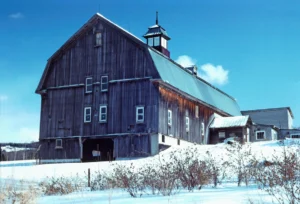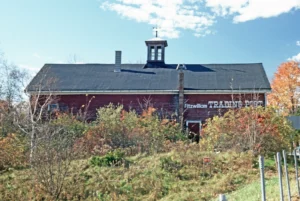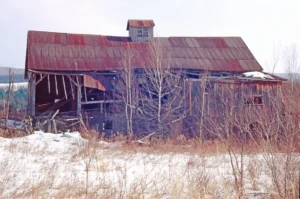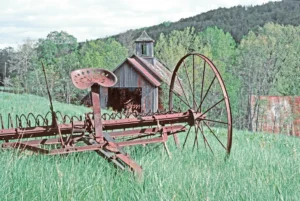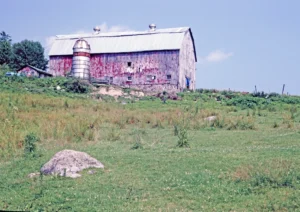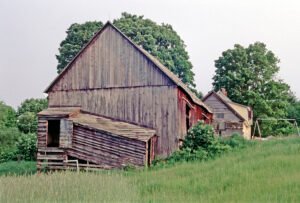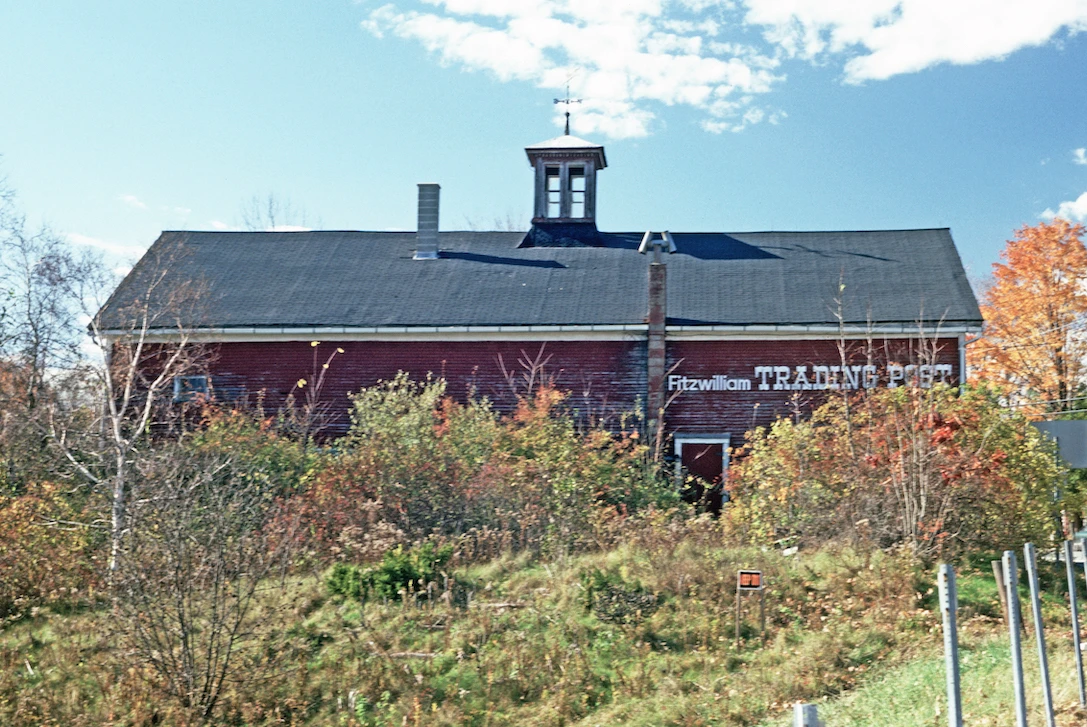
Some of the largest and most photogenic barns in New England were built along river valleys, where centuries of flooding deposited deep, fertile soil ideal for growing crops and hay. The Connecticut River Valley, for example, once supported hundreds of prosperous farms stretching from the Canadian border to Long Island Sound. Some of these farms occupied land that Native Americans had cultivated for corn and vegetables long before European settlers arrived.
One of the best ways to find old barns is to follow the rivers along back roads that are often overlooked by modern travelers. Keep an eye out for a roofline that hints at a barn hidden from view. Many of these structures once stood prominently in open fields but have gradually disappeared behind encroaching trees and shrubs.
I also rely on old editions of the DeLorme state map books, available at many local bookstores. These maps show an astonishing number of back roads throughout New England. Some of the earlier editions even identify individual buildings, including churches, barns, and schools, making them particularly useful for the barn hunter.
Another approach that has served me well is to stop at a local country store and ask for directions. This method is not quite as effective as it once was, because many of the old country stores have changed hands and their new owners are less familiar with the surrounding countryside.
Local farmers are another excellent source of information. They often know about abandoned farms and old barns tucked away in places you might never discover on your own. In all my years of searching, I have never had a farmer refuse to help me locate an old barn.
There is, however, one memorable exception to my otherwise welcoming experiences. In fifty years of barn hunting, I was turned away only once when I asked permission to photograph a barn in Berlin, Massachusetts. The gentleman who owned it refused my request. I returned a year later, hoping for a different outcome, only to have the same farmer tell me he still did not want me on his property.
So get out there, enjoy the countryside, and take plenty of photographs. Follow those winding back roads, explore the river valleys, and keep looking beyond the trees. Before you know it, you, too, may find yourself with thousands of barn photographs—and a lifetime of memories to go with them.