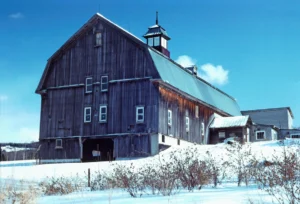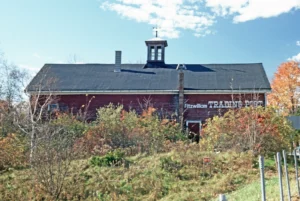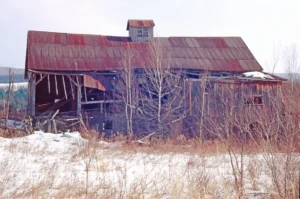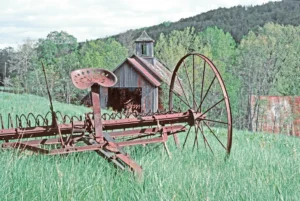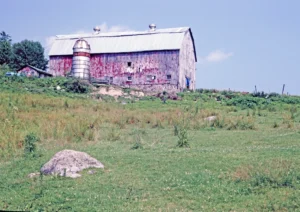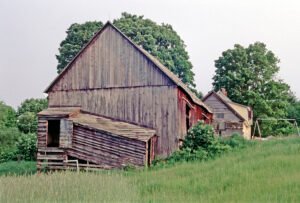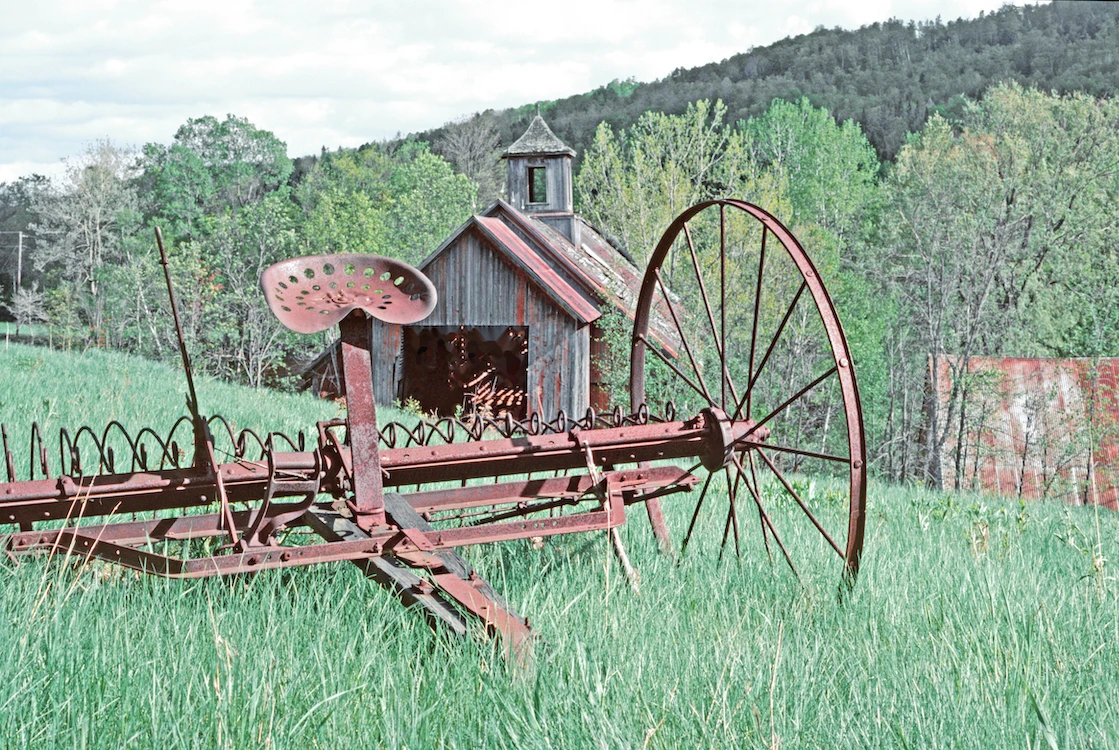
Learning to photograph barns took me fifty years of trial and error—mostly error.
To begin with, it’s often difficult to get a good shot from the side of the road. That means getting out of the car and knocking on doors. My rule is simple: never go onto someone else’s property without permission. Most farmers are delighted that you’re interested in their farm, though occasionally you’ll have to come back another time. It pays to carry a pencil and a pocket notebook to record names, directions, and promises to return.
Once I have permission to explore, I begin walking around the barn, looking for the best angles and points of view. Farms often have old machinery, trucks, discarded equipment, and piles of manure scattered about. These things can either detract from a photograph or add character and a sense of place.
I take lots of pictures from different angles. It’s easier to discard a weak photograph than to wish you had taken one.
Lighting is critical. Landscape photography is all about the way light strikes solid objects. The interplay of light and shadow reveals contrasting planes, surfaces, and textures, giving a photograph depth and interest.
I generally keep the sun at my back or off to one side. Shooting directly into the sun can leave a photograph looking flat or reduce the barn to a silhouette. On the other hand, the soft, subtle light of early morning or late afternoon can produce wonderfully atmospheric images.
Learning where to stand comes with experience. Some angles work better than others, and a few steps in either direction can make a surprising difference. I try to avoid photographic clichés, looking instead for an unusual perspective or some small detail that gives a familiar subject a fresh look.
Patience is part of the process. I’ve stood in fields for long minutes, waiting for a cloud to move into just the right position or an animal to turn and look my way. Sometimes the wait pays off; sometimes it doesn’t.
When I first started taking photographs, I probably took ten pictures for every usable shot. These days, I’m down to three or four. After all these years, I’ve learned that good barn photography is less about how many pictures you take than about developing an eye for what works—and what doesn’t.