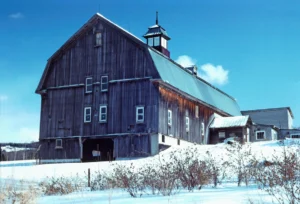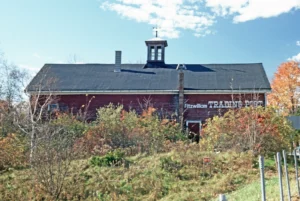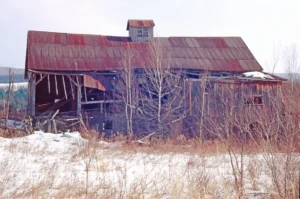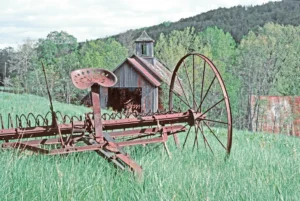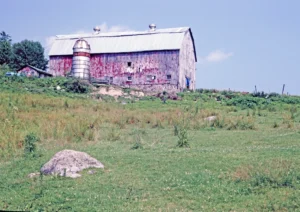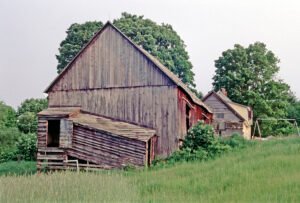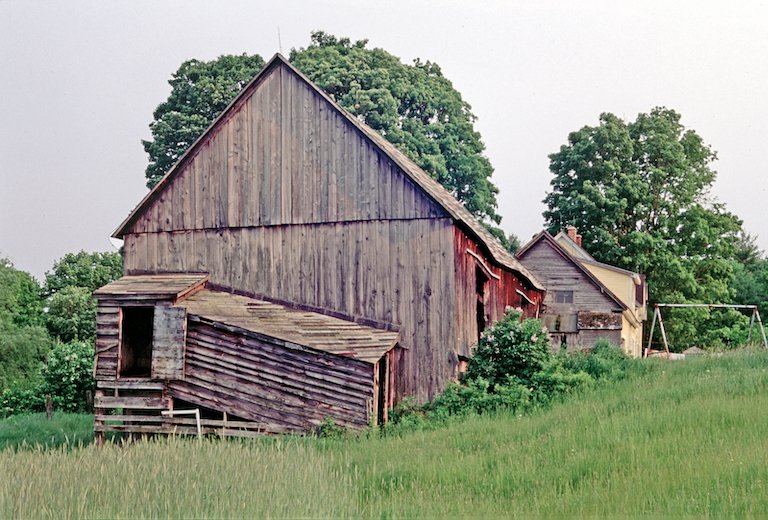
I bought my first 35mm camera when I was around thirty. When I began photographing old barns, I had no particular goal in mind. I was simply drawn to them. They reminded me of the barn back home where I had played as a child.
Barns are unpretentious. They are folk architecture, built to serve a purpose rather than to impress. They speak of farm families working together and of the animals they sheltered—cows, horses, sheep, and chickens. And there is something comforting about a building that has stood for 150 or 200 years, weathering the seasons and witnessing generations come and go.
I began keeping my camera in the car wherever I went, whether traveling on business or taking weekend trips with my family. When my son became a competitive bicycle racer, I drove him—and my camera—all over the northeastern United States.
After the children grew up, my wife and I continued to travel. I brought my camera and a notebook; she brought books to read while I wandered through fields photographing barns or struck up conversations with farmers.
I often thought about writing a book about barns, but somehow I never quite got around to it.
When digital photography came along, I bought a digital camera. Suddenly, taking photographs was easier than ever, and my collection grew rapidly. Before long, it filled dozens of CDs and thumb drives in addition to numerous ring binders of slides and negatives. I finally retired and had more time to pursue my passion.
Then everything changed. I was diagnosed with bladder cancer. Within days, I was in the hospital having my bladder removed. I recovered physically over the next few months, but mentally, I struggled. I couldn’t stop thinking about what would happen to all those photographs. Would they simply be discarded? And what about the book I had always intended to write?
To keep busy, I began digitizing my old slides. As I worked through them, I made a startling discovery: many of the barns I had photographed were gone.
That realization gave me an idea for a book: Lost Barns: The Disappearance of Small Family Farms in New England.
The idea changed my outlook and gave me a renewed sense of purpose. I began searching the internet for town clerks, local historians, and historical societies. I sent emails and made phone calls, reaching out to dozens of people in an effort to uncover the stories behind the vanished barns. I interviewed descendants of the families who had worked those farms, piecing together fragments of local history that might otherwise have been forgotten.
There were plenty of dead ends. Unlike old houses, barns are rarely well documented. Many of my photographs had been taken along back roads where there were no street signs or house numbers to help identify a location. Some barns had disappeared so completely that no trace of them remained.
But the search itself had become worthwhile. What had begun as a personal collection of photographs had grown into something larger: an effort to preserve the memory of a vanishing way of life.
My book, Lost Barns, offers readers a chance to see these wonderful old buildings once more—and to remember the family farms and rural traditions that disappeared along with them.